
Tombola casino Plinko
Introduction
Plinko is one of those casino formats that looks almost too simple at first glance. There is no reel set, no payline map, no card table, and no long list of side rules to learn before the first round. A ball drops from the top of the board, bounces through a field of pegs, and lands in a payout slot at the bottom. That is the whole visual idea. Yet in practice, Tombola casino Plinko can create a surprisingly tense session because the simplicity of the screen hides a very specific balance of pace, probability and stake exposure. The full picture of payment methods lives in play Sweet Bonanza at Tombola Casino, including the less common ones.
I find that this is exactly why Plinko keeps drawing attention. It removes the visual noise that many online slots rely on and replaces it with immediate cause-and-effect. You choose a stake, often choose a risk profile, release the ball, and watch the outcome develop in real time. The result is easy to read, but the feeling is not always easy to predict. A low-risk setup can feel controlled and repetitive, while a high-risk version can turn a short run into a sequence of small returns punctuated by rare but much larger multipliers.
For UK players looking at Tombola casino Plinko, the key question is not whether the interface is easy to understand. It is. The real question is what kind of experience this format actually offers once money is on the line. That means understanding how the ball path works, how payout distribution is built, why the tempo feels different from a slot, and where the main strengths and limitations show up in a real session. This is where Plinko becomes more interesting than its toy-like appearance suggests.
What Plinko is and why it attracts so much attention
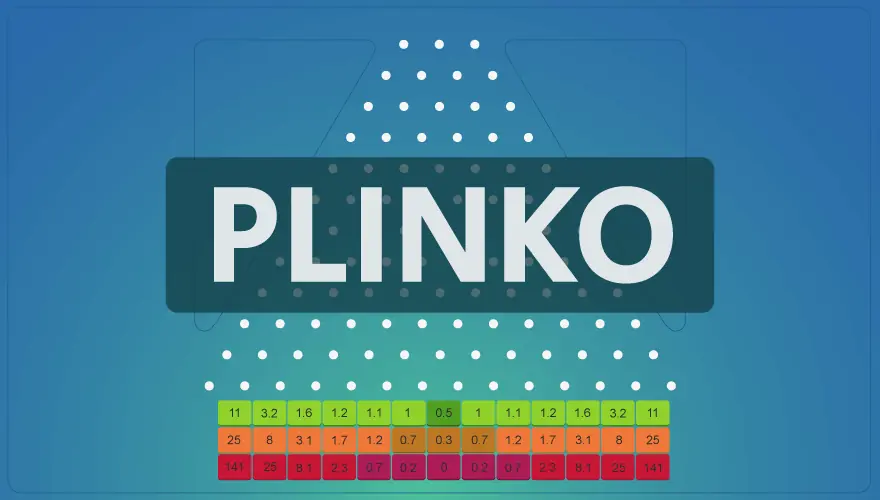
At its core, Plinko is a probability-driven drop game. A ball falls from the top of a vertical board and collides with pegs on the way down. Each collision sends it slightly left or right until it reaches one of several slots at the bottom, each tied to a multiplier. The centre slots usually pay less and appear more often, while the edge slots tend to hold the largest multipliers and appear less often. That basic structure is the foundation of the entire experience.
The reason Plinko stands out is that it makes randomness visible. In a slot, the random number generation is hidden behind spinning reels and symbol stops. In roulette, the spinning wheel creates a physical illusion of order, but the betting structure is already fixed before the ball lands. Plinko sits somewhere in between. It gives the player a moving object to follow, which creates suspense, but the underlying logic still depends on mathematical distribution rather than skill. This visible path is part of the appeal. Players feel connected to the result because they watch it happen step by step.
Another reason the format became so noticeable is that it produces short, highly readable rounds. There is no need to wait through bonus intros, free spin counters or feature ladders. Every drop resolves quickly. That speed matters. It makes Plinko easy to test, easy to repeat, and easy to overestimate. One of the most memorable things about this format is that a board full of pegs can make pure randomness feel like a story. The ball seems to “almost” reach a top multiplier often enough to keep attention locked in, even though the outcome was never under player control.
For many players, that combination of transparency and tension is the hook. Plinko looks casual. The session often does not feel casual once variance starts to show.
How the Plinko mechanic actually works on the board
To understand Tombola casino Plinko properly, it helps to separate what the player sees from what the maths is doing underneath. On screen, the process is straightforward: select the stake, choose the risk level if that option is available, and drop the ball. The ball then bounces through a peg grid until it settles in a payout slot. In practical terms, however, the important part is not the animation itself but the payout distribution attached to the board layout.
Before staking anything, check the displayed RTP range and the volatility setting, since these two figures determine how often the ball lands in the centre versus the edges. Also confirm whether the payout table shown on the board matches the actual multiplier values in the game rules, as some versions apply a house-edge reduction to the advertised numbers.
Before you set a stake, read the risk level as a statement about bankroll behaviour rather than a cosmetic tweak. In most cases, higher-risk settings compress the payout map so that most pins route toward modest single-digit multipliers, while a slim band of near-edge paths pays out several thousand times the stake on a rare drop. Lower-risk setups instead flatten the distribution, shrinking the gap between common and uncommon outcomes so that returns arrive more frequently but rarely reach triple figures. The visible board and the bounce animation stay essentially identical across these modes, which means two players watching the same reel of drops could be experiencing wildly different volatility profiles — one bleeding out steadily, the other waiting for a single outlier hit to cover a long session.
| Core element | What it does | What it means in practice |
|---|---|---|
| Peg board | Creates left-right deflections during the drop | Makes the result feel dynamic and trackable |
| Bottom slots | Assign multipliers to landing positions | Determine whether the round ends in a small return, break-even style result or a larger hit |
| Risk setting | Changes the payout distribution | Directly affects session volatility and expected streak length |
| Stake size | Sets the value of each drop | Controls how quickly variance impacts the bankroll |
One detail players often miss is that the visual path can encourage emotional interpretation. When a ball clips toward the edge and then falls back into the centre, it feels like a missed opportunity. That feeling is real, but it should not be confused with near-skill or near-control. Plinko is not a timing game. The path is part of the entertainment layer; the important decision remains how much to stake and what risk profile to choose before the drop begins.
Why the game feels engaging and how the session tempo develops
Plinko has a very specific rhythm. Each round is brief, the result is easy to understand, and the transition into the next drop is almost frictionless. This creates a session flow that can feel smoother than many slots. There are no dead spins in the classic sense because every round visibly does something. The ball moves, bounces, hesitates, and lands. Even when the return is poor, the player still receives a full visual sequence. That matters more than it sounds. Motion creates involvement.
The pace also changes depending on the chosen setup. On lower-risk settings, the session can feel steady and almost methodical. Returns may arrive often enough to create the sense that the bankroll is circulating rather than collapsing. On higher-risk settings, the tempo becomes psychologically sharper. Many drops may end with low multipliers, but the possibility of a rare top-end hit keeps attention unusually high. This is one of the format’s defining traits: the rounds are short, yet the emotional spacing between outcomes can feel long because players are waiting for the board to produce an outlier.
In my view, Plinko is especially good at creating “micro-suspense.” A slot often builds anticipation through bonus triggers or expanding features. Plinko builds it through trajectory. A two-second bounce sequence can carry the same tension as a much more elaborate animation because the player can instantly see where the ball might end up. That is elegant design. It is also why short sessions can become longer than intended.
There is another practical point here. Because the rounds resolve quickly and the interface is usually stripped back, players may underestimate how many paid drops they have made in a short period. This is one of the most important things to understand before starting. A simple game is not automatically a slow game. In many cases, the opposite is true.
How risky Plinko can be and who is likely to enjoy it
The visual playfulness of a Plinko board often masks how aggressively its risk settings can behave, since the same title spans from casual centre-weighted returns to volatile edge-multiplier configurations that outperform many mainstream slots in harshness, particularly when the largest payouts are reserved for rare outcomes and the centre dominates with smaller wins — a mismatch between appearance and volatility that catches players off guard more often than the format's carnival aesthetic suggests.
For players who enjoy direct, fast resolution and clear outcome logic, Plinko can be a strong fit. It suits people who want to know exactly what happened in each round without decoding symbol combinations or waiting for feature cycles. It can also appeal to players who like to experiment with session style by adjusting stake size and risk level. That flexibility gives the game more personality than its simple layout suggests.
It may be less suitable for players who prefer longer entertainment arcs, layered bonus rounds or top casino games inside Tombola Casino where presentation carries a large part of the appeal. Plinko is mechanically exposed. There is not much decorative structure around it. If someone enjoys the build-up of free spins, feature buys, wild combinations or narrative themes, Plinko may feel too bare after the novelty wears off.
Plinko is more suitable for players who: prefer quick rounds, understand variance, and want a format where the risk profile is easier to read than in many slots.
It is less suitable for players who: want long-form bonus content, frequent thematic changes, or a slower session with more visual variety.
A useful way to frame it is this: Plinko is not complicated, but it is not automatically forgiving. The board may look friendly. The payout curve decides whether it really is.
What players should understand about probabilities, variance and likely outcomes
Before launching Tombola casino Plinko, the most important thing to accept is that visible motion does not change the underlying probability model. The ball’s route may look organic, but the game is still built around weighted outcome frequencies. The centre of the board tends to be visited more often than the extremes, and the payout table is arranged around that fact. So while every drop feels open, the long-run behaviour is structured.
This has several practical consequences:
Frequent small returns do not necessarily mean strong value. On many boards, common landings produce modest multipliers that help sustain the session but do not meaningfully grow the bankroll.
Top multipliers can dominate perception. Players remember rare edge hits far more vividly than the long stretch of ordinary drops that usually surrounds them.
Risk settings change session shape, not just mood. Moving from low to high risk can transform the same stake into a completely different bankroll experience.
One observation that stands out after extended play is that Plinko often creates a stronger illusion of “almost winning” than slots do. In a slot, a near miss is usually a visual arrangement of symbols. In Plinko, the ball literally travels toward a high-paying edge before bouncing away. That makes the disappointment more physical and easier to remember. It is not a flaw in itself, but it is something players should notice in their own behaviour.
Another point worth stressing is that a short sequence tells you very little about the board’s true behaviour. A few lucky edge hits can make a high-risk setup look generous; a dry run can make a moderate board feel harsher than it is. Plinko is one of those formats where anecdotal impressions form quickly and can be misleading just as quickly. If a demo mode is available, it is useful not because it predicts future results, but because it helps the player understand the pace, distribution feel and emotional rhythm before using real money.
| Session factor | Lower-risk setup | Higher-risk setup |
|---|---|---|
| Typical return frequency | More regular modest outcomes | Lower consistency, more dry spells |
| Bankroll pressure | Usually milder over short sessions | Can escalate quickly |
| Emotional profile | Steadier, less dramatic | Sharper tension, stronger swing effect |
| Appeal | Good for controlled testing of the format | Better suited to players comfortable with larger outcome gaps |
How Plinko differs from slots and other common casino formats
The biggest difference between Plinko and a classic online slot is structural clarity. Slots wrap their maths in symbols, paylines, cluster systems, bonus rounds and themed presentation. Plinko strips all of that away. The player is not waiting for combinations to align. The player is waiting for a path to resolve. This makes the outcome easier to read, but not necessarily easier to absorb financially.
Compared with roulette, Plinko offers a more animated sense of progression. Roulette resolves in a single landing event after a spin. Plinko resolves through a chain of visible deflections. That extra movement creates more suspense without adding genuine strategic depth. Compared with crash-style products, Plinko is less about timing out and more about accepting a pre-built distribution. Compared with Tombola Casino blackjack practical player guide generally, it offers less decision-making but often more immediate accessibility.
What I think sets Plinko apart most clearly is this: it compresses the casino experience into pure distribution and anticipation. There is no bluffing, no tactical betting pattern that changes the mathematics, and no feature ladder to chase. If a player enjoys seeing the logic of outcomes in a cleaner form, Plinko can feel refreshingly honest. If a player wants layered interaction, it can feel thin. To understand the wagering rules behind each offer, open reload bonus codes at Tombola Casino next.
That is why Plinko should not be judged by the standards of a slot theme or a live table atmosphere. Its value lies elsewhere. It offers a concise, high-visibility version of chance, where the board itself is the attraction and the session shape depends heavily on the chosen risk setting.
Practical advantages and real limitations of the format
Plinko has several genuine strengths. First, it is easy to learn. A new player can understand the basic flow within seconds. Second, it communicates variance more clearly than many casino products. Even without advanced knowledge, players can usually grasp that central outcomes are common and edge outcomes are rarer. Third, it supports short sessions well. If someone wants a format that does not require time to “warm up,” Plinko delivers that immediately.
There is also a usability advantage. Because the interface is usually clean, it is easier to focus on stake size, risk level and actual result patterns. In some slots, presentation can obscure how the session is really going. Plinko does less hiding. That is useful for players who prefer transparent structure.
Its limitations are just as real. The first is repetition. Once the novelty of the bouncing path fades, the loop can feel narrow for players who need more variety. The second is pace-related exposure. Fast rounds can increase total wagering speed without the player fully noticing it. The third is emotional distortion. Because rare high multipliers are so visually dramatic, players may anchor too heavily to them and undervalue the ordinary outcomes that dominate most sessions.
A final limitation is that Plinko can appear more controllable than it is. Choosing a risk level is meaningful, but it does not create skill expression. It changes the style of randomness; it does not let the player master it. That distinction matters.
What to check before starting a session on Tombola casino Plinko
Before starting, I would focus on a few practical checks rather than treating Plinko as a casual click-and-go diversion. The first is the risk setting. Do not choose based on the biggest visible multiplier alone. Choose based on the type of session you actually want. If you want to understand the board and extend play, a lower-risk option is usually the better starting point. If you deliberately want wider swings, then a higher-risk setup may make sense, but it should come with smaller stake discipline.
The second is stake calibration. Because Plinko rounds resolve quickly, even a moderate stake can produce more bankroll movement than expected over a short period. The right stake is not the one that looks harmless on a single drop; it is the one that remains comfortable after a sequence of drops with no standout result.
The third is expectation management. Plinko is not designed to provide constant big outcomes. It is designed to create suspense around distribution. That sounds abstract, but it has a simple real-world meaning: many sessions will be defined by ordinary landings, not by headline multipliers. If a player goes in expecting frequent dramatic returns, disappointment will arrive quickly.
I would also pay attention to personal response. If the near-edge bounces start creating the urge to chase a specific multiplier, that is a sign to slow down or stop. One of the more distinctive things about Plinko is how easily it can make the next drop feel “due,” even though the format offers no such guarantee. That is a psychological trap, not a hidden system.
Final verdict on what Plinko really offers
Tombola casino Plinko offers a clean, fast and unusually readable form of chance. Its appeal comes from the contrast between a simple interface and a session experience that can vary sharply depending on stake choice and risk level. The board is easy to understand, but the bankroll effect can be very different from what first-time players expect. That is the central truth of Plinko.
Its strongest qualities are clarity, immediacy and visible suspense. You can see each round unfold, you can understand why edge outcomes matter, and you can adjust the overall session style more directly than in many themed slots. For players who like concise mechanics and transparent structure, that is a real advantage.
The caution point is equally clear. Plinko can be fast, emotionally sticky and more volatile than its appearance suggests. The bouncing path creates involvement, but it does not create control. High-risk settings can produce long stretches of modest or poor outcomes in exchange for a small chance at a large multiplier, and that trade-off needs to be understood before the first paid drop.
In short, Plinko is a good fit for players who want a stripped-back casino format with immediate feedback and a visible probability curve. It is a weaker fit for those who want layered bonus content, richer themes or slower, more varied sessions. If approached with realistic expectations, Tombola casino Plinko can be an interesting and effective format. If approached as a simple toy-like diversion, it is easy to misread. That difference is exactly why the game deserves a closer look.
FAQ
How does the Tombola Plinko ball drop work in real-money play?
A Plinko round sends a ball from the top of the board, and it bounces down between pegs into a payout slot. Multipliers on the board determine the outcome of each landing. The result is calculated for each individual round after the ball completes its path.
What should be checked before launching a new Plinko round?
Confirm the bet amount shown for Plinko and make sure the balance is enough for that stake. Check that the round controls are active and not frozen on a loading screen. If there is a promo or code requirement, verify the game status before starting.
Can Plinko be played in demo mode and then switched to real-money play?
Plinko supports both demo mode and real-money play through the same game section. The demo version lets practice the flow of ball drops and multipliers without using funds. When switching to real-money play, balances and bet limits will follow the live account rules.
What are the main rules for multipliers in Plinko?
Multipliers are assigned to the slots at the bottom of the Plinko board. The ball drop decides which slot it finishes in, and that slot’s multiplier applies for the round. Changing bet size affects potential returns, but not the multiplier assignments themselves.
If a Plinko game doesn’t start, what troubleshooting steps usually fix it?
Refresh the browser tab or restart the game load from the game lobby. Check whether an ad blocker or strict privacy setting is blocking game assets. Confirm stable internet and switch to another browser or device if the issue persists.
Does Plinko work the same way on mobile via the Tombola mobile site or mobile casino app?
Plinko is designed for mobile play, and the main controls remain the same: place the stake, launch a round, and watch the ball drop. The board may scale to the screen size, so the pegs and slot labels can appear smaller on compact displays. A stable connection helps keep the animation smooth during real-money play.
Is Plinko separate from live casino tables like roulette or blackjack?
Plinko is a self-contained casino game with its own ball-drop mechanics and multiplier outcomes. Live casino tables such as roulette, blackjack, or live dealer games use a dealer interface and different betting flow. That means stakes, timing, and game visuals operate differently across the sections.
What’s a common beginner mistake when playing Plinko for real money?
Overlooking the displayed stake before launching the ball drop is the most common slip. Another frequent issue is starting a round on an outdated screen after changing device or account, which can lead to confusion about the current balance. Always confirm the stake and game status before each launch.
How does account verification affect Plinko withdrawals or any real-money activity?
Verification is typically required for withdrawing funds, and the casino may also limit some account actions until verification is completed. Plinko itself remains available for real-money play based on the account’s current status. For any withdrawal-related steps, check the verification requirements in the cashier or account area.
Ready to launch a Plinko round now in the Tombola casino games lobby?
Select Plinko, set the stake, and start the ball drop. Confirm the correct mode and balance, then watch the multiplier outcome when the ball lands.